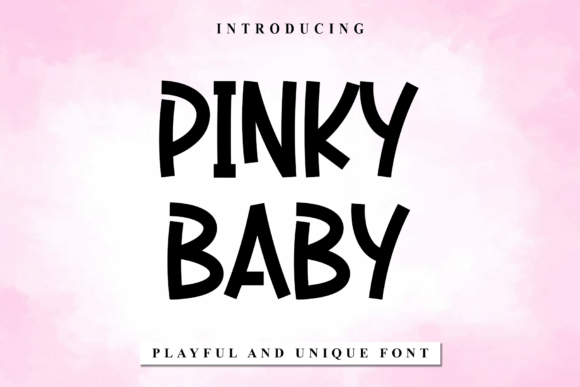
Enhancing Visual Communication with the Pinky Baby Font
Typography plays a crucial role in how information is perceived, and the choice of font can significantly influence the effectiveness of a message. Among the growing selection of modern typefaces, Pinky Baby stands out as a minimalist yet expressive font that balances simplicity with aesthetic appeal. Designed with a clean structure and soft contours, it serves as a versatile tool for creators across disciplines.
Understanding the Aesthetic of Pinky Baby
Pinky Baby is not just another minimalist font; it's a carefully crafted typeface that brings a sense of warmth and approachability to digital and print media. Its design avoids excessive ornamentation, focusing instead on smooth curves and balanced spacing. This makes it ideal for projects that aim to convey clarity and elegance without overwhelming the viewer.
What sets Pinky Baby apart is its subtle personality. While many minimal fonts can feel cold or overly clinical, this typeface introduces a gentle tone that makes it suitable for both professional and creative contexts. Whether used in branding, editorial design, or user interfaces, it maintains readability while enhancing the visual tone of the content.
Practical Advantages of Using Pinky Baby
One of the most compelling features of Pinky Baby is its adaptability. It works seamlessly across a wide range of applications, from digital platforms to printed materials. Here are some of its core benefits:
- High readability even at smaller sizes
- Neutral yet expressive character that blends well with other design elements
- Scalable design that retains quality across different formats and resolutions
- Timeless appeal, avoiding trends that may date quickly
These characteristics make it an excellent choice for designers who need a font that can perform consistently in various environments without compromising on style.
Use Cases Where Pinky Baby Excels
The versatility of Pinky Baby allows it to be used effectively in multiple design scenarios. Below are some of the most common applications where this font shines:
- Branding and Logos: Its clean and modern look makes it ideal for brand identities that aim for a contemporary yet approachable feel.
- Editorial and Publishing: The font’s legibility makes it suitable for long-form content such as magazines, books, and digital articles.
- Web and UI Design: With excellent screen rendering, Pinky Baby enhances user experience in websites and mobile applications.
- Marketing and Advertising: Its subtle charm helps in creating engaging promotional materials that stand out without being overwhelming.
These applications demonstrate how a single font can be leveraged across different media to create cohesive and visually appealing communication strategies.
Designing with Pinky Baby: Tips and Considerations
While Pinky Baby is inherently versatile, a few design considerations can help maximize its impact:
- Pairing with other fonts: For contrast and visual interest, consider pairing it with a bold sans-serif or a serif typeface in headings or accents.
- Color choices: The font works well in both light-on-dark and dark-on-light schemes. However, high contrast ensures optimal legibility.
- Spacing and layout: Due to its minimal design, adequate spacing around text blocks enhances readability and prevents visual clutter.
Designers should also consider the tone of the content when using Pinky Baby. It works best with messages that are modern, sincere, and understated. Avoid using it in contexts that require a highly formal or ornate appearance.
How Pinky Baby Fits into Current Design Trends
Modern design trends are increasingly leaning toward minimalism, clarity, and emotional resonance. Pinky Baby aligns perfectly with these shifts. Its softness and simplicity reflect a growing preference for human-centered design that prioritizes user comfort and emotional connection.
In the realm of branding, for instance, there's a noticeable shift away from overly stylized fonts toward ones that feel authentic and relatable. Pinky Baby fits this mold by offering a balance between professionalism and warmth. It also supports the trend of using typography as a key design element rather than a background detail.
Who Should Consider Using Pinky Baby?
Because of its clean and neutral design, Pinky Baby appeals to a wide range of users:
- Graphic designers looking for a reliable and expressive font for diverse projects
- Content creators who want to maintain readability and aesthetic consistency across platforms
- Web developers aiming to enhance UI/UX with a modern and scalable typeface
- Business owners and marketers crafting brand identities that feel approachable yet professional
- Educators and researchers preparing materials that are easy to read and visually engaging
This broad applicability makes Pinky Baby a valuable asset for anyone involved in visual communication, regardless of their specific field or experience level.
Implementing Pinky Baby in Digital Workflows
Integrating Pinky Baby into design workflows is straightforward. Most modern design software, including Adobe Creative Cloud, Figma, and Sketch, supports custom font imports. For web use, it can be embedded via standard font services or self-hosted using CSS @font-face rules.
When using the font on the web, it's important to ensure performance optimization. This includes subsetting the font to include only necessary characters and leveraging modern font formats like WOFF2 for faster loading times.
Final Thoughts on the Value of Pinky Baby
In a world where visual clarity and emotional tone are increasingly important, Pinky Baby offers a compelling solution. It bridges the gap between minimalism and expressiveness, allowing designers to communicate with both precision and warmth. Whether you're crafting a digital interface, a printed publication, or a brand identity, this font provides the flexibility and elegance needed to elevate your work.
As design continues to evolve, the importance of thoughtful typography cannot be overstated. Choosing the right font like Pinky Baby ensures that your message is not only seen but also felt—making it a quiet yet powerful tool in any creative arsenal.