Nexmod Regular: A Bold Fusion of Geometry and Modern Typography
The Evolution of Display Typography in the Digital Age
In the ever-evolving landscape of digital design, typography has moved beyond mere legibility and into the realm of visual storytelling. Nexmod Regular stands at the forefront of this shift, offering a typeface that is not only highly readable but also visually arresting. Its design philosophy is rooted in the principles of geometric clarity and modular precision, making it a standout choice for designers aiming to communicate innovation and modernity.
Unlike traditional serif or sans-serif fonts designed for long-form readability, Nexmod Regular leans into its identity as a display font. This means it excels in environments where visual impact is as important as content—think headlines, branding elements, and UI components in digital interfaces. Its blocky yet refined structure allows it to maintain legibility even at large sizes while still projecting a strong personality.
Design Characteristics That Define Nexmod Regular
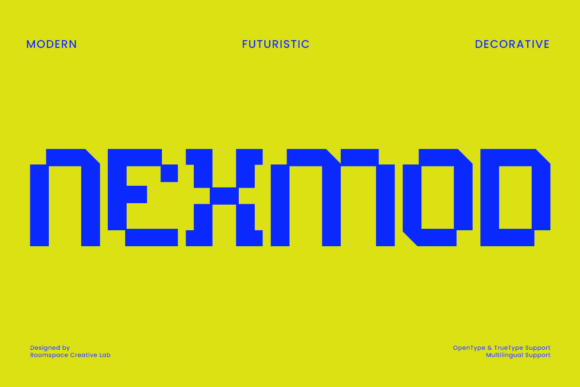
At its core, Nexmod Regular is defined by its use of sharp angles, consistent stroke widths, and modular construction. These features contribute to a sense of balance and uniformity across the character set, making it ideal for designs that require a cohesive visual language. Each glyph is carefully spaced to ensure smooth alignment and readability, even when used in complex compositions.
- Bold Geometric Forms: The font’s angular structure is reminiscent of architectural blueprints and digital interfaces, reinforcing its futuristic appeal.
- Modular Construction: Letters are built from repeating geometric units, lending a sense of rhythm and logic to the overall design.
- High Readability: Despite its stylized appearance, Nexmod maintains clarity, especially in headline and subheading contexts.
- Consistent Kerning: Precise spacing ensures that words and phrases appear visually balanced, even in tight layouts.
Practical Applications Across Industries
What sets Nexmod Regular apart from many other display fonts is its versatility. While it’s undeniably futuristic, it doesn’t limit itself to a single aesthetic or industry. Designers have successfully integrated it into a wide range of applications, from tech branding to editorial design.
- Tech Branding: Companies in the software, AI, and digital innovation sectors often use Nexmod to reflect their forward-thinking identity. Its geometric structure aligns well with modern brand systems that emphasize minimalism and precision.
- Album Covers: In the music industry, visual impact is key. Nexmod’s bold presence makes it a popular choice for album art, especially in electronic, synthwave, and experimental genres.
- Editorial Headlines: Whether in print or digital magazines, Nexmod adds a contemporary edge to headlines without compromising readability.
- Posters and Promotional Materials: From event posters to advertising campaigns, Nexmod commands attention and helps reinforce a modern aesthetic.
- Logos and UI Elements: Its modular nature makes it ideal for designing logos, app icons, and interface components that need to feel both futuristic and functional.
Technical Strengths and Typographic Flexibility
Beyond its visual appeal, Nexmod Regular offers a range of technical features that make it suitable for both experimental and professional use. It supports both uppercase and lowercase characters, which is relatively uncommon for many display fonts. This flexibility allows designers to use it in more nuanced typographic settings without sacrificing stylistic integrity.
The font also includes OpenType features such as ligatures, stylistic alternates, and contextual forms, which can enhance the visual rhythm of text in complex layouts. Additionally, it offers multilingual support, making it accessible for international design projects that require more than just the standard Latin character set.
Comparing Nexmod Regular to Other Display Fonts
While many display fonts aim to be visually striking, few strike the balance between form and function as effectively as Nexmod Regular. Fonts like Orbitron and Exo offer similar futuristic aesthetics but often lean more heavily into their sci-fi or digital themes, sometimes at the expense of readability. Nexmod, by contrast, retains a sense of groundedness that makes it more adaptable across different design contexts.
Whereas some modular fonts can feel rigid or overly technical, Nexmod introduces subtle variations in character width and angle that add visual interest without disrupting the overall harmony of the typeface. This makes it particularly effective in branding and editorial design, where consistency and legibility are paramount.
Considerations for Using Nexmod Regular
Despite its many strengths, Nexmod Regular is not a one-size-fits-all solution. Like any display font, it performs best in specific contexts. Here are a few considerations to keep in mind when incorporating it into a design project:
- Avoid Long-Form Text: Due to its stylized nature, Nexmod is best used for headlines, titles, and short bursts of text rather than extended body copy.
- Pair Thoughtfully: To maintain visual hierarchy, it works well when paired with simpler, more neutral sans-serif fonts like Roboto, Open Sans, or Montserrat.
- Test Across Devices: Because of its geometric structure, certain characters may render differently on lower-resolution screens. Always test in multiple environments before final deployment.
- Use in High-Contrast Settings: Nexmod shines in high-contrast environments—think dark backgrounds with light text or vice versa. This enhances its clarity and visual impact.
Real-World Examples and Emerging Trends
Designers are increasingly turning to Nexmod Regular in projects that demand a strong typographic identity. For example, a recent rebranding of a blockchain startup used Nexmod in its logo and digital assets to convey a sense of precision, innovation, and digital fluency. Similarly, a science fiction film festival used the font across its promotional materials to evoke a sense of futurism and technological advancement.
In the editorial design space, Nexmod has found a home in digital magazines and online publications that aim to present content in a visually engaging format. Its structured yet dynamic appearance allows it to stand out in responsive web layouts without overwhelming the reader.
Conclusion: A Font That Reflects the Future of Design
Nexmod Regular is more than just a typeface—it's a reflection of current design trends that emphasize clarity, structure, and visual impact. Its bold geometric forms and modular construction make it a powerful tool for designers across a wide range of industries. Whether you're building a tech brand, designing a poster, or crafting a digital interface, Nexmod offers a compelling combination of style and substance that few other display fonts can match.