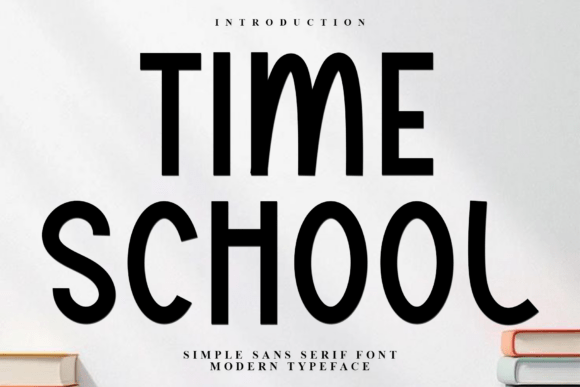
Time School Font: A Versatile Choice for Creative Design Projects
Understanding Time School: A Distinctive Typeface for Modern Design
Time School is a uniquely designed font that blends softness with visual appeal, making it stand out in the world of typography. Its character strokes are carefully crafted to convey a sense of warmth and individuality, setting it apart from more conventional fonts. This typeface is particularly well-suited for creative professionals seeking to add a personal or expressive touch to their work.
While many fonts aim for neutrality or minimalism, Time School embraces a more artistic approach. Its design is not only visually engaging but also functional across a variety of design contexts. Whether used in print or digital media, it offers a balance between readability and aesthetic appeal.
Why Consider Time School for Your Design Projects?
Designers often seek fonts that can convey a specific mood or message without sacrificing legibility. Time School achieves this by combining elegant curves with a natural, handcrafted appearance. This makes it a strong candidate for projects that require a humanized, approachable look.
Its versatility is another key strength. The font includes a wide range of characters, making it suitable for multilingual content and diverse typographic needs. Additionally, it is compatible with various operating systems and design software, including Windows and open-source platforms. This broad compatibility ensures that it can be easily integrated into existing workflows without technical hurdles.
Key Benefits of Using Time School
- Expressive Design: The soft, unique strokes of Time School lend a personal and artistic feel to any project.
- Versatile Application: It works well across multiple design formats, including branding, packaging, editorial design, and digital illustrations.
- Cross-Platform Compatibility: Designed to function seamlessly on both Windows and open-source platforms, it offers flexibility for different user environments.
- Extended Character Set: With support for various languages and special characters, it accommodates a wide range of typographic needs.
Considerations and Tradeoffs
While Time School offers many advantages, it's important to evaluate its suitability based on the specific needs of your project. As a more stylized font, it may not be the best choice for applications that require strict neutrality or high levels of formal readability.
For instance, in long-form text such as academic papers or technical documents, a more conventional serif or sans-serif font might be more appropriate. Time School excels in short-form or visual contexts where the font itself can serve as a design element rather than a neutral text carrier.
Additionally, while the font is widely compatible, users should verify its performance across different software and output formats, especially if the project involves print production or cross-device digital display.
When Time School Is a Strong Fit
Time School is especially well-suited for creative fields where visual impact and emotional resonance are key. It works effectively in:
- Branding and Identity Design: For brands that want to project a warm, approachable image.
- Artistic and Craft-Based Projects: Including greeting cards, posters, and handmade product labels.
- Editorial and Lifestyle Publications: Where typography contributes to the overall aesthetic and tone.
- Web and App UI Design: For interface elements that benefit from a soft, inviting appearance.
When Alternatives May Be Worth Exploring
Despite its strengths, there are scenarios where other fonts may be more effective. If your project requires:
- High Legibility in Long Text: Consider more traditional serif or sans-serif fonts like Georgia, Helvetica, or Open Sans.
- Formal or Corporate Use: Fonts such as Times New Roman or Arial may be more appropriate.
- Extreme Scalability: Some stylized fonts lose clarity at very small or very large sizes; testing is recommended.
It's always wise to compare Time School with similar fonts in terms of character design, spacing, and overall visual tone before making a final selection.
Practical Insights for Decision-Making
When evaluating Time School for your next project, consider the following factors:
- Project Tone: Does the font align with the emotional or aesthetic tone you want to convey?
- Readability Requirements: Will the font be used in contexts where clarity and ease of reading are essential?
- Technical Compatibility: Test the font in your intended software and output format to ensure consistent rendering.
- Licensing and Accessibility: Confirm that the font is available under a license that suits your intended use, especially for commercial applications.
Designers are encouraged to download a sample version if available, and test Time School in real-world scenarios before committing to its use across an entire project.
Final Thoughts: Is Time School Right for You?
Time School offers a compelling combination of softness, uniqueness, and versatility that can elevate a wide range of creative projects. It is particularly effective when the goal is to infuse a design with warmth and personality. However, like any design tool, its effectiveness depends on how well it aligns with the specific needs and constraints of the task at hand.
If your project calls for a font that stands out while remaining functional, Time School is worth serious consideration. On the other hand, if your design requires strict neutrality or optimal readability in dense text, alternative fonts may serve you better.
In the end, the choice of typography should support both the visual goals and the practical demands of your work. Time School is a strong option for those who value expressive design without compromising on usability.