Kolillah: A Modern Islamic Font Bridging Tradition and Contemporary Design
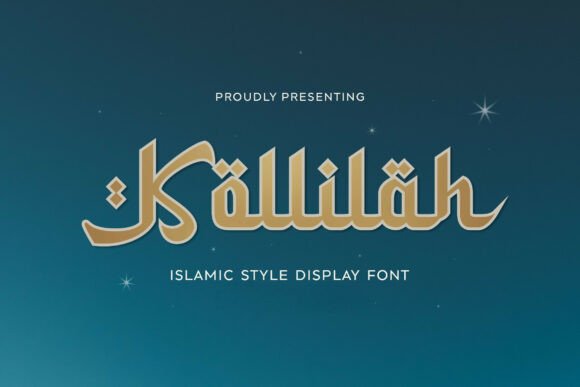
Kolillah is a modern Islamic font that merges geometric precision with the flowing elegance of traditional Arabic calligraphy. It offers a visually compelling typeface that respects historical design principles while adapting to current typographic needs. The font’s bold yet graceful strokes make it a versatile choice for a wide range of design applications that require a distinct Middle Eastern aesthetic.
Understanding the Design of Kolillah
Kolillah is rooted in the visual traditions of Islamic calligraphy, drawing from the fluidity and rhythm characteristic of Arabic script. Unlike many digital fonts that prioritize uniformity over artistry, Kolillah maintains a sense of hand-crafted elegance. Its letterforms balance symmetry and organic flow, making it both readable and visually engaging. This duality allows the font to serve both aesthetic and functional roles in design projects that aim to reflect Islamic cultural heritage.
Why Designers Choose Kolillah
Designers often seek typefaces that convey cultural authenticity while remaining adaptable to modern contexts. Kolillah fulfills this need by offering a refined appearance suitable for both print and digital media. Its visual richness makes it especially effective in branding and editorial design where a strong cultural identity is desired. Whether used in Eid greeting cards, Ramadan campaign materials, or halal food packaging, Kolillah adds a distinctive Middle Eastern flavor without sacrificing clarity or professionalism.
Key Benefits of Using Kolillah
- Cultural Resonance: Kolillah connects with audiences familiar with Arabic calligraphic traditions, making it ideal for Islamic-themed projects.
- Versatility: It works well across various formats including posters, invitations, packaging, and social media content.
- Visual Impact: Its bold and elegant strokes command attention while maintaining readability at different sizes.
- Modern Adaptation: While rooted in tradition, Kolillah is designed for contemporary use, ensuring compatibility with current design software and platforms.
Considerations When Using Kolillah
Despite its strengths, Kolillah may not be the best fit for every project. It is primarily intended for display use rather than long-form body text. In contexts requiring extended reading—such as academic papers or multi-page reports—its ornate nature may reduce legibility. Additionally, designers unfamiliar with Arabic script may need time to adjust to its stylistic nuances, especially when integrating it with Latin typefaces.
When Kolillah Is the Right Choice
Kolillah excels in design scenarios that call for a strong cultural presence and visual elegance. It is particularly effective in:
- Eid and Ramadan Campaigns: Its traditional roots make it ideal for seasonal marketing and community outreach materials.
- Halal Branding: From food packaging to travel services, Kolillah reinforces authenticity and cultural alignment.
- Editorial and Event Design: Magazines, posters, and wedding invitations benefit from its refined aesthetic.
- Social Media Content: For platforms like Instagram and Facebook, where visual appeal is key, Kolillah enhances engagement with a unique cultural touch.
When Alternatives May Be More Suitable
While Kolillah is a powerful design tool, certain projects may benefit from alternative typefaces. For instance, if a design requires a minimalist or highly legible font for body text, simpler Arabic or Latin fonts may be more appropriate. Additionally, projects that aim for a pan-Islamic or non-regional aesthetic may prefer more neutral typefaces that do not carry the stylistic emphasis of calligraphic forms.
Practical Insights for Choosing Kolillah
Selecting the right font involves more than visual appeal—it requires understanding the message, audience, and medium. Kolillah is best suited for designers aiming to evoke tradition while maintaining a modern edge. Before finalizing its use, consider the following:
- Project Context: Does the design require cultural authenticity or visual prominence? Kolillah shines in such cases.
- Text Length: For short, impactful text like headlines or captions, Kolillah performs exceptionally well.
- Design Pairing: If combining with other fonts, choose complementary typefaces that provide contrast without clashing.
- Target Audience: Consider whether your audience will appreciate or be familiar with the calligraphic style embedded in Kolillah.
Conclusion: Evaluating Kolillah for Your Design Needs
Kolillah stands out as a modern Islamic font that successfully bridges the gap between historical calligraphy and contemporary design. Its ability to convey elegance, cultural depth, and adaptability makes it a valuable asset for specific design contexts. However, like any design tool, its effectiveness depends on how well it aligns with the project’s goals. By evaluating factors such as intended use, audience expectations, and typographic compatibility, designers can determine whether Kolillah is the right choice for their creative vision.